Nancy Potter, Ph.D., CCC-SLP
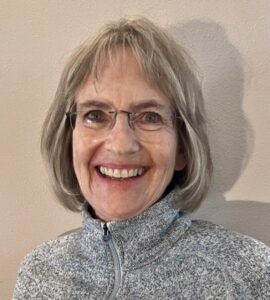 Nancy Potter, Ph.D., CCC-SLP is a speech-language pathologist and a retired professor of Speech & Hearing Sciences at Washington State University in Spokane, Washington. Dr. Potter earned her PhD from the University of Wisconsin-Madison. She is an experienced clinician who has worked in just about every setting. She presently is involved in two galactosemia–focused research studies. Galactosemia Grows Up was funded by the Galactosemia Foundation. This study examines how the 24 (of the 33) children with classic galactosemia she assessed in their home 20 years ago are doing as adults. The other study, Babble Boot Camp, funded by NIH and foundation grants, examines outcomes during preschool years when speech therapy was initiated in babies with classic galactosemia who were as young as eight weeks of age. She is the co-author the Babble Boot Camp Basic Training course available through Northern Speech Services. She has published and presented her research nationally and internationally. Dr. Potter has given numerous workshops for practicing speech-language pathologists across the country and internationally on assessment and treatment of CAS and dysarthria.
David Jenson, Associate Professor and Chair of Speech and Hearing Sciences at Washington State University
David Jenson is an Associate Professor and Chair of Speech and Hearing Sciences at Washington State University, where he directs the Speech electrophysiology lab. He researches the way that sensory and motor systems interact to support speech processing in both clinical and non-clinical populations. His primary focus is evaluating the relationship between the underlying processes and observable measures of function.
Judith Fridovich-Keil
Judith Fridovich-Keil is a Professor of Human Genetics at Emory University School of Medicine, in Atlanta GA. She was born and raised in Durham NC. Judy’s training includes an AB in Biochemistry from Princeton University, a PhD in Biology from the Massachusetts Institute of Technology, and postdoctoral training at Harvard Medical School. She has been certified by the American Board of Medical Genetics and Genomics since 1996. She has authored more than 100 original research papers, and many reviews, book chapters, and other publications. Galactosemia has been the focus of research in Judy’s lab for more than 34 years, and she has had the privilege of participating in every Galactosemia Foundation conference since 2006. Judy and her husband, Mark, are the proud parents of 2 grown children.
Sumit Verma, MD, MBBS, DNB
I am a pediatric neurologist and an associate professor of pediatrics and neurology at Children’s and Emory University, Atlanta, Georgia, United States of America. I work with children and young adults with rare neurological diseases delivering expert diagnosis, advanced therapeutics and an opportunity to involve in outcome measures research to understand disease severity and progression. My areas of research focus include clinical, electrophysiological, laboratory biomarkers. I have successfully performed clinical and basic science studies in the areas of Duchenne Muscular Dystrophy, Spinal Muscular Atrophy, Myasthenia Gravis and Chronic Inflammatory demyelinating polyneuropathy. In recent years, with availability of novel genetic therapies, I have been instrumental in studying bio-specimens in collaboration with research laboratories on the Emory University campus. I have correlated the research laboratory data with clinical and electrodiagnostic measures to improve our understanding of the above-mentioned rare diseases. The studies have laid the groundwork for clinical trial preparedness, disease mechanisms, especially molecular and electrodiagnostic signatures of disease activity.
Dr. M Estela Rubio-Gozalbo
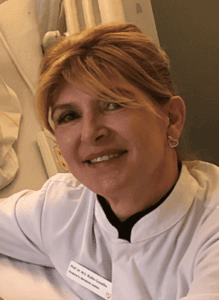 After a joyful childhood in Spain, she spent her senior year of high school in Hutchinson, Kansas, as part of an international exchange program. Upon returning to Spain, she began her medical studies at the University of Valencia. Following her move to the Netherlands—after meeting her Dutch husband—she learned the language and completed her medical degree there.
She pursued specialty training in Pediatrics, followed by sub-specialization in Inborn Errors of Metabolism at various universities across the Netherlands. She also earned her PhD during this time on mitochondrial disorders.
Since 2000, she has held an appointment at Maastricht University Medical Center, working in both the Department of Pediatrics and the Clinical Genetics Laboratory. Full professor of pediatric inborn errors of metabolism, she currently serves as Head of Pediatric Metabolic Diseases. Over the years, she has developed and led a research line focused on galactosemia, fostering numerous international collaborations. In 2012, she initiated the Galactosemia Network for professionals, which has become a key platform for advancing care and research in this rare group of disorders.
She is actively involved in numerous professional associations related to metabolic diseases and is passionate about teamwork, collaboration, and optimal care for patients and their families.
https://www.researchgate.net/profile/Maria-Rubio-Gozalbo
Dr. Bianca Panis
I am Bianca Panis and I was born in Maastricht, a southern city in the Netherlands. I did my BA/MA Medical Biology at the University of Utrecht and graduated in 2000, and in 1996 I started my medical study also at the University of Utrecht and graduated in 2002. Thereafter I started my PhD at the department of pediatric metabolic diseases of the Maastricht University Medical Center in classical galactosemia under supervision of professor dr. Estela Rubio Gozalbo.
In 2006 I finished my PhD with the thesis: “Classical Galactosemia; new insights” (Promotors: Prof dr. J.P.M. Geraedts and Prof. dr. L.J.I. Zimmermann. Co-promotor Prof. dr. M.E. Rubio-Gozalbo).
In 2010 I became a pediatrician with special interest in child neurology and genetic metabolic diseases. In 2013 I graduated as a child neurologist and worked for 7 years in Zuyderland Medical Center Heerlen/Sittard-Geleen. I returned to the field of the genetic metabolic diseases in 2021 and together with professor dr. Rubio-Gozalbo I work since then in the department of pediatric metabolic diseases of the Mosakids children’s hospital of the Maastricht University Medical Center. My special interest are the neurological complications of classical galactosemia.
I live together with my husband, two children and dog in Maastricht, the city I was born. I love being in nature, and to do sports.
Dr. Ellen M. Hulshof
Ellen M. Hulshof is a junior researcher at the Movement Disorders Expertise Centre of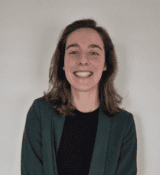
the University Medical Center Groningen, the Netherlands. During her Master’s thesis,
she worked on the validation of a screening tool to improve the recognition of movement disorders in patients with inherited metabolic disorders. Following this project, she continued her work at the Expertise Centre to complete and publish the study.
In parallel, she became involved in two additional research projects. The first focuses on quality of life in patients with inherited metabolic disorders and movement disorders, with the aim of developing a disease-specific patient-reported outcome measure. The second project focuses on movement disorders in individuals with classic galactosemia, using quantitative movement analysis to improve phenotyping and to gain a better understanding of the underlying mechanisms and progression of these disorders.
Ellen is actively involved in the movement disorders community and has contributed to
the organization of the Dutch “Rare Movement Disorders” patient day. She has also
supported multiple fundraising and awareness initiatives for inherited metabolic
disorders.
Sandy van Calcar, PhD, RD, LD
Sandy van Calcar completed her undergraduate work at Oregon State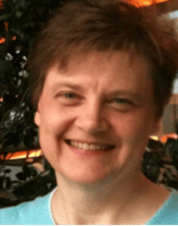 University and master’s and doctorate degrees in Nutritional Sciences from the University of Wisconsin-Madison. Sandy is an Associate Professor in the Department of Molecular and Medical Genetics at Oregon Health & Science University in Portland, Oregon, Sandy’s practice includes both patient care and clinical research focused on those with inborn errors of metabolism, including galactosemia. Sandy has published results of galactose content of various foods and served on the diet and bone groups for the International guidelines for treatment of galactosemia. The first guidelines were published in 2017 and are now being revised for publication later this year.
Kent Lai, Ph.D., M.B.A., M.H.A.
Professor Lai is currently a tenured Full Professor of Pediatrics, Nutrition and Integrative Physiology at the University of Utah. He has spent the past two decades of his career passionately developing novel, effective, and safe therapies for rare genetic disorders such as Classic Galactosemia, inherited phosphomannomutase 2 deficiency (PMM2-CDG), and inherited phosphoglucomutase 1 deficiency (PGM1-CDG). He has a strong track record of research expertise in multiple therapeutic modalities that include, but are not limited to, small molecule modulators, nutraceuticals, mRNA gene replacement therapy, lentiviral- and AAV-based gene addition therapies, as well as mRNA/genomic gene editing.
Professor Lai has documented and ongoing collaborations with biotechnology companies such as Moderna Inc. through which he has gained insights and experiences into preclinical and clinical studies for various forms of gene therapy. He is the Principal Investigator of nine NIH research grants (five of them R01’s), multiple industrial contracts and Foundation grants. Additionally, he has served as standing members of various NIH and AHA Study Sections, and is a lead/co-inventor of multiple awarded/published patent applications.
Professor Lai is a co-founder of the first University of Utah’s spinoff startup called AlleleRx
Therapeutics LLC that focuses on gene therapy, and above all, he is also the father of an autistic child and consequently, he can relate very well to the challenges and struggles of families who care for children with genetic diseases on a daily basis.
Dr. Veronica Gomez-Lobo
Dr. Gomez-Lobo is an obstetrician gynecologist who specializes in pediatric and adolescent
gynecology. She currently serves as Senior Clinician and Director of Pediatric and Adolescent
Gynecology (PAG) Program within NICHD where she conducts research on rare gynecologic
conditions, premature ovarian insufficiency, and fertility preservation. She currently serves as PI for a protocol to perform ovarian tissue cryopreservation for children with conditions associated with accelerated loss of follicles/oocytes including Turner syndrome and classic galactosemia. For more details on research endeavors: Research – Veronica Gomez-Lobo Program | NICHD – Eunice Kennedy Shriver National Institute of Child Health and Human Development (nih.gov)
Kevin Elias
Kevin Elias is a board-certified OB/GYN and Gynecologic Oncologist at the Cleveland Clinic. He is the initial recipient of the Lilli and Seth Harris Endowed Chair for Ovarian Cancer Research. His clinical practice focuses on the surgical and medical treatment of ovarian cancer, including fertility-sparing options for younger women, while his laboratory researches new approaches for the prediction, prevention, and treatment of various types of cancer. Dr. Elias is an expert in nanotechnology and has been investigating the potential of gene delivery for both cancer treatment as well as fertility restoration for various causes of premature ovarian insufficiency.
Dan Gallo, PhD
Title: Executive Vice President, Clinical Development and Medical Affairs (Jaguar Gene Therapy)
Dr. Gallo is a seasoned Global Clinical Development and Medical Affairs executive with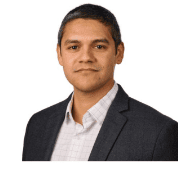 extensive experience advancing therapies from preclinical development through commercialization, with a particular focus on rare diseases and specialty therapeutics. He has worked in neurodevelopmental disorders, neurodegenerative diseases, rare blood disorders, immunology, psychiatry, sleep medicine, virology, and AAV gene therapy. Dr. Gallo is known for working closely with patient advocacy organizations to ensure the patient voice and family needs are reflected in medical affairs and clinical development strategies. He holds a PhD in Cell and Molecular Biology and Biochemistry from Northwestern University.
Tessa Clarkson, PhD
Title: Chief Executive Officer & Co-Founder (Psychlomere) / Clinical Development Consultant (Jaguar Gene Therapy)
Dr. Tessa Clarkson is a leading expert in clinical trial design and endpoint development for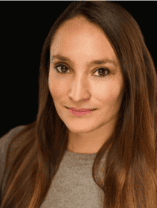 CNS and rare disease. With over 15 years of experience in clinical trials, she and her team at Psychlomere have led and sponsored studies to develop patient-centered clinical assessments that can be used as regulatory-accepted endpoints to measure treatment responses to novel therapeutics. Their work has led to innovative trial designs and contributed to recent guidance from the FDA that support ethical, patient-centered, rigorous, and rapid clinical trials. Dr. Clarkson and her team at Psychlomere are partnering with Jaguar Gene Therapy to support patient-centered endpoint development and trial design to accelerate their gene therapy programs.
Albert Freedman, PhD
Albert Freedman, PhD, is a psychologist, educator, and rare disease advocate with more than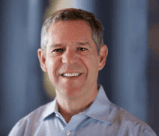
two decades of experience supporting individuals and families affected by rare disease and disability. As one of the world’s leading psychologists specializing exclusively in the needs of patients and families affected by rare disease, he brings a depth of insight that advocacy organizations, biopharmaceutical companies, and the agencies serving them rely on to better understand the patients and families at the center of their work.
Dr. Freedman’s perspective is shaped by both professional training and lived experience. His
son, Jack, lived with spinal muscular atrophy for 26 years, and the lessons of that journey inform every family he counsels and every organization he advises. Dr. Freedman’s work spans family counseling, facilitation of rare disease support groups, advisory engagements on patient-centered strategy, training for patient-facing teams, and international public speaking. Whether the audience is a single family or a global organization, his focus is the same: making a difference in the lives of patients and families affected by rare disease.
Caden Halberg, Keynote Speaker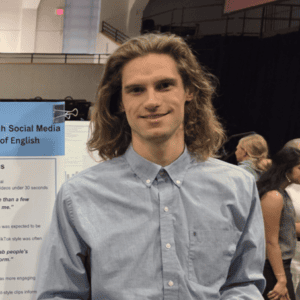
My name is Caden Halberg and I have Galactosemia. I am from Raleigh, North Carolina and I am a 2026 graduate of Elon University, where I studied Professional Writing and Rhetoric. My undergraduate research explored rare disease advocacy, particularly how communication strategies can be used to engage broader audiences and strengthen awareness efforts.
Logan Greenberg, Keynote Speaker
Logan Greenberg is a musician, songwriter, and music business professional from Austin,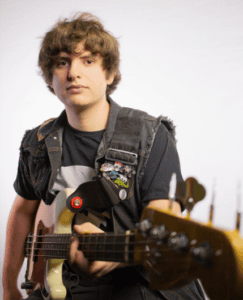 Texas, best known as the lead singer and bassist of the pop-punk band Live Another Day, which has performed more than 90 live shows since forming in 2018. In May 2026, Logan graduated Summa Cum Laude from Berklee College of Music with a Bachelor of Arts in Music Business. Alongside his academic achievements, he has independently managed all aspects of running a modern band.
Born with Classic Galactosemia in 2002, Logan has remained deeply connected to the Galactosemia community throughout his life, attending Galactosemia conferences since 2014. In 2020, he organized and promoted the charity concert “Rock the Causebah,” raising more than $3,000 for The Galactosemia Foundation and the National Organization for Rare Disorders. Logan’s younger brother, Adam, also has Classic Galactosemia, reflecting his family’s long standing connection to the community.
Kelley Foley, Galactosemia Foundation Board Member – Research
Kelley is the mother of three children. Her youngest son, Keegan, was born with Classic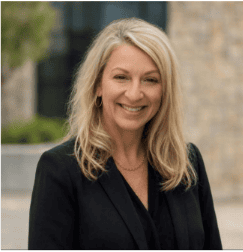
Galactosemia in 2010. She and her husband, Brian, live in the Chicago. Kelley has worked as a medical Speech-Language Pathologist in an acute care hospital for more than 27 years, specializing in adult care. She is actively involved on hospital committees and enjoys teaching and mentoring colleagues.
Kelley serves as the Research Team Lead for the Galactosemia Foundation and has been an active member of the research team for over 12 years. She joined the Foundation’s Board in 2021. Kelley and her family attended their first Galactosemia Foundation conference when Keegan was less than two months old. That experience reinforced the importance of becoming involved, staying informed, and supporting the Galactosemia community. Over the years, they have organized numerous fundraisers under Keegan’s Kause and remain dedicated advocates. Kelley is especially passionate about advancing research and developing potential treatments for individuals living with Galactosemia.
In her free time, Kelley enjoys spending time with family and friends, volunteering,
traveling, and making lasting memories together at the beach.
Gillian Sapia, RN, Galactosemia Foundation Board Member – Advocacy
Gillian Sapia, RN, is a registered nurse, rare disease advocate, and mother of a daughter
with Classic Galactosemia. She serves on the Board of Directors for the GalactosemiaFoundation, where she leads legislative advocacy focused on accelerating research, improving regulatory pathways, coverage and access, and advancing policies that better serve individuals living with galactosemia and ultra rare. Gillian is passionate about amplifying patient voices, fostering collaboration, and driving meaningful change for
families affected by galactosemia.